Showing posts with label technology. Show all posts

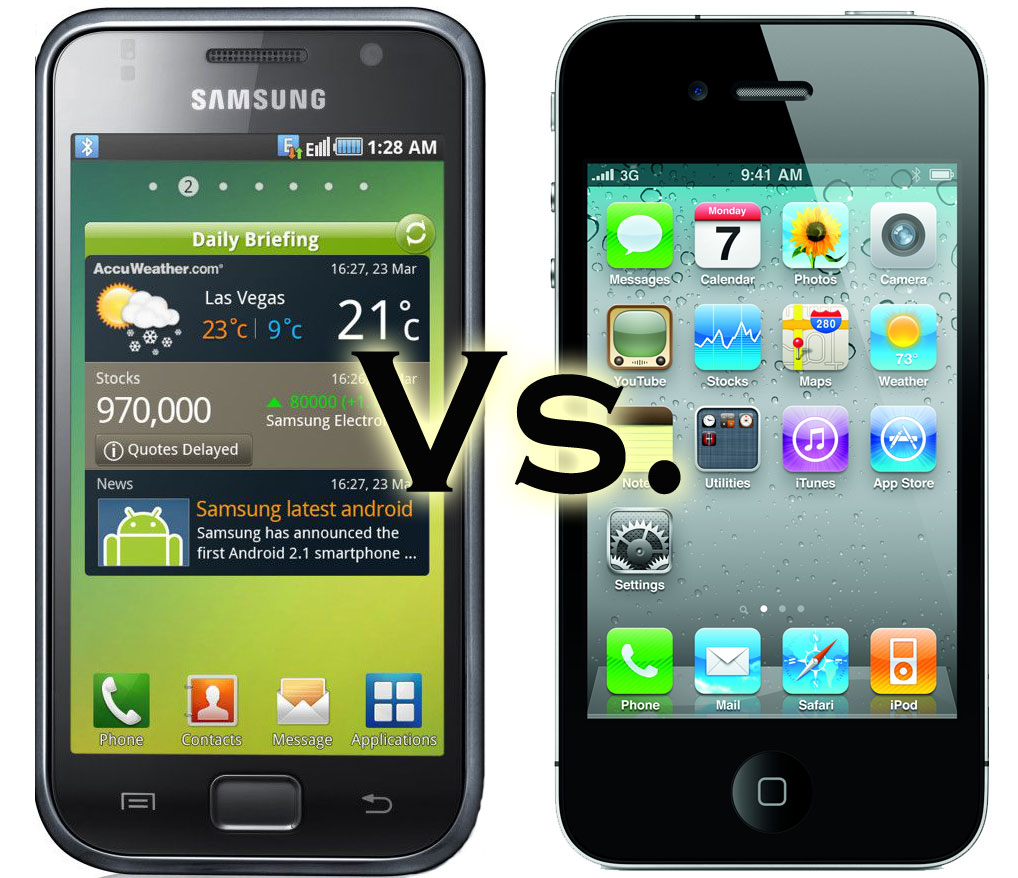
SAMSUNG LOST TO APPLE IN AMERICAN COURT


Apple won more than $1 billion in a massive victory Friday over South Korean giant Samsung, in one of the biggest patent cases in decades - a verdict that could have huge market repercussions.

A jury in San Jose, California rejected Samsung's counterclaims against Apple, according to media reports - a big win for the Silicon Valley giant, which had claimed its iconic iPhone and iPad had been illegally copied.

The jury, which had examined infringement claims and counter-claims by Apple and Samsung, ruled the South Korean electronics giant had infringed on a number of patents, the tech websites Cnet and The Verge said in live courtroom blogs.

The verdict affects patents on a range of Samsung products including some of its popular Galaxy smartphones and its Galaxy 10 tablet - devices alleged to have been copied from the iPhone and iPad.

"This is a huge, crushing win for Apple," said Brian Love, a professor of patent law at Santa Clara University.

"All of its patents were held valid, and all but one were held to be infringed by most or all accused Samsung products. Even better for the company, five of the seven patents were held to be willfully infringed by Samsung."

Love said this means that Judge Lucy Koh "now has the discretion to triple Apple's damages award, which is already a monstrous and unprecedented $1.051 billion."

Technology analyst Jeff Kagan said of the verdict: "This is a great day for Apple. And it will turn into a very expensive day for Samsung."

Kagan said it was not immediately clear if Samsung would be able to continue to use the technology and pay Apple for the right to do so, or if they must pull their devices and redesign them.

In any case, the verdict in the case - one of several pending in global courts - is likely to have massive repercussions in the hottest part of the technology sector, smartphones and tablets.

Even a delay in sales could endanger Samsung's position in the US market, where it is currently the top seller of smartphones.

A survey by research firm IDC showed Samsung shipped 50.2 million smartphones globally in the April-June period, while Apple sold 26 million iPhones. IDC said Samsung held 32.6 percent of the market to 16.9 percent for Apple.

The jury reached its verdict after deliberating for less than three days, examining claims of infringement by both sides. The trial heard evidence during 10 days over a three-week period.

Samsung had steadfastly denied the charges by Apple, claiming it developed its devices independently, and countersued in the case, seeking more than $400 million for infringement on its wireless patents.

The verdict came the same day a South Korean court ruled Apple and Samsung infringed on each other's patents on mobile devices, awarding damages to both technology giants and imposing a partial ban on product sales in South Korea.

The court banned sales in South Korea of Apple's iPhone 4 and iPad 2, as well as Samsung's Galaxy S and Galaxy SII among other products

LEFT OVER FOOD CAN BE SOON UPCYCLED INTO PLASTIC


It's hard to believe anyone throws away a pastry or excess coffee — that's extra body fuel you're wasting, buddy! With big food chains it happens all the time. In Hong Kong, the fact that Starbucks has about 5,000 extra tons of stale food and coffee grounds per year prompted the company to explore bio-refining.

The bio-refining process takes food waste and combines it with fungi that excrete enzymes that tackle the carbohydrates in the food. The second stage is to toss the mixture into fermenting vats where bacteria further decomposes the material resulting in a sugary substance known as succinic acid. The big upside is that the process could see waste end up as plastics or laundry detergents, instead of just heading to the landfill.

Succinic acid forms into colorless, odorless crystals. When processed further it can be used as a sweetener, or turned into biodegradable plastics that could again be re-processed.

Starbucks Hong Kong tapped scientist Carol S. K. Lin of City University, Hong Kong as a leader of the project. She already enjoyed success using this form of bio-refining on a smaller scale, where she turned cafeteria waste into useful materials. Lin reports the next step is to see if the process works on a large, commercial scale. The team will be testing the refinery process at a pilot plant in Germany.

The exciting part of this project is that it uses existing waste to create new items. Bio-refining is not new, but has traditionally used materials or crops created specifically for the process. In this case, it's materials created (and used) for another purpose that do the job — essentially creating a giant up-cycling project.

According to their financial reports, Starbucks is an $11.7 billion dollar company with thousands of global locations. If it decided to take all the trash it generates beyond the pilot project at Starbucks Hong Kong, it makes you wonder what impact that could have.

Could pastries and coffee grounds supply the plastic for our next generation of phones, household items or cars? What a delicious thought!

The results of the project have been reported at a meeting of the American Chemical Society.

Asia gets fastest undersea data cable system


The Submarine-cable Express (ASE) transfers data via an optical fibre system at 40 gigabits per second, and is three milliseconds faster than any other cable between Singapore and Tokyo, the BBC News reported.
The gain in speed may sound small, but could prove critical to financial trades made out of the region.
The so-called 'high frequency trades', controlled by computers, involve making what may be hundreds of thousands of transactions in less than a second -- all determined by a programme that tracks market conditions.
With banks and hedge funds competing against each other, the size of the profit or loss can come down to a matter of beating the competition by a fraction of a second, explained Ralph Silva, a strategist at Silva Research Network.
'High frequency trading is basically computer trading -- you programme a set of rules and as events happen -- the computer decides to buy or sell commands,' he was quoted as saying by the BBC.

'As all incoming data is received by all banks at the same time, and because the computers are all the same with the same speed of processors, the length of time the command takes to get to the exchange makes a big difference,' he said.
'Three milliseconds in computer time is an hour in human time,' he added.
The route for the new cable was chosen to be as straight as possible, reducing the time to get information from one end to the other to 65 milliseconds.
The data transfer capacity of 40 Gbps is the equivalent of downloading a high-resolution DVD in about two seconds. The new facility adds to a web of undersea cables in the waters around Japan.
These include the ones run by Australian operator Telstra International; Taiwan's largest phone operator Chunghwa Telecom; and the global telecommunications service provider Pacnet, based in Singapore and Hong Kong.
Many were damaged by a powerful earthquake near Japan's northeast coast in March 2011. The problems helped influence where the new cable was laid, said Japan's biggest telecommunications provider.
'We avoided the area around Taiwan, where earthquakes are common, and laid the route near the Philippines instead, making the cable very safe and reliable,' Hiroyuki Matsumoto, senior director of network services at NTT, one of the four partners involved in the project said.